Architecture and building traditions

Sjåbakkenhuset - Sjit helvedes kåken
Sjåbakkenhuset, or better known as «Sjit helvedes kåken», made history with Anton Sjåbakken's famous letter to the Kåfjord construction office in Olderdalen in 1949. Today, the house is a tourist attraction in Manndalen.
Architecture and building traditions
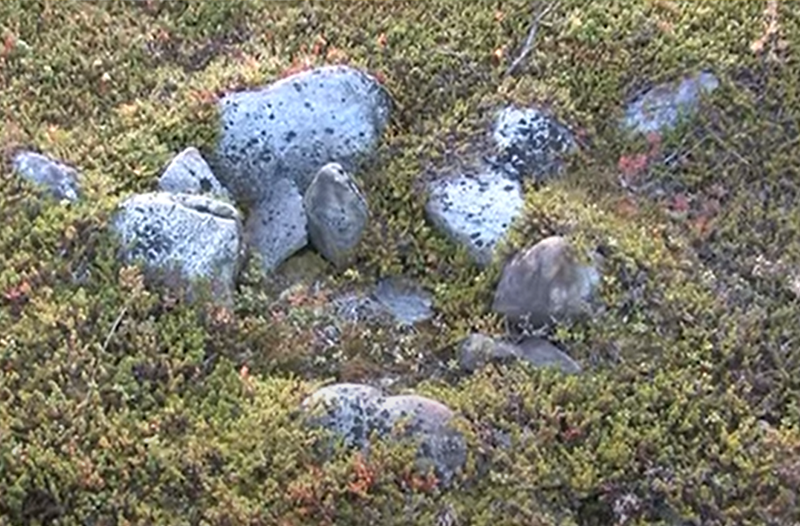
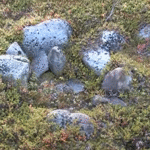
Gammetufter, Ytre Gamvik
Gammetufters are the remains of farmsteads. In outer Gamvik in northern Troms, these mounds are still visible in the terrain.
Architecture and building traditions
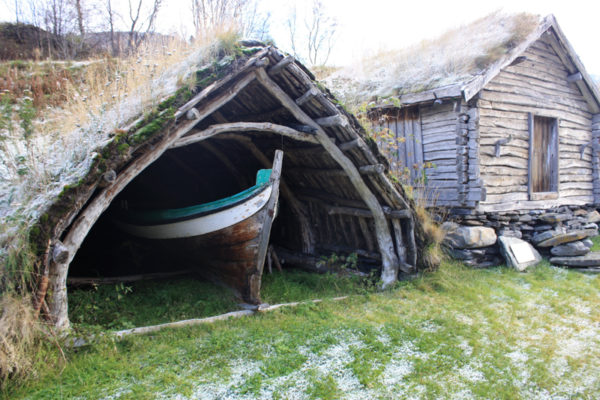
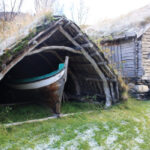
Fjærabuene in Birtavarre
North of Birtavarre there are several shoreline arches lined up along the seashore. Eight of these are examples of Sea Sami building techniques from the 19th century. The huts were used to store seafaring tools and fishing equipment, but were too small to house the boats.
Architecture and building traditions
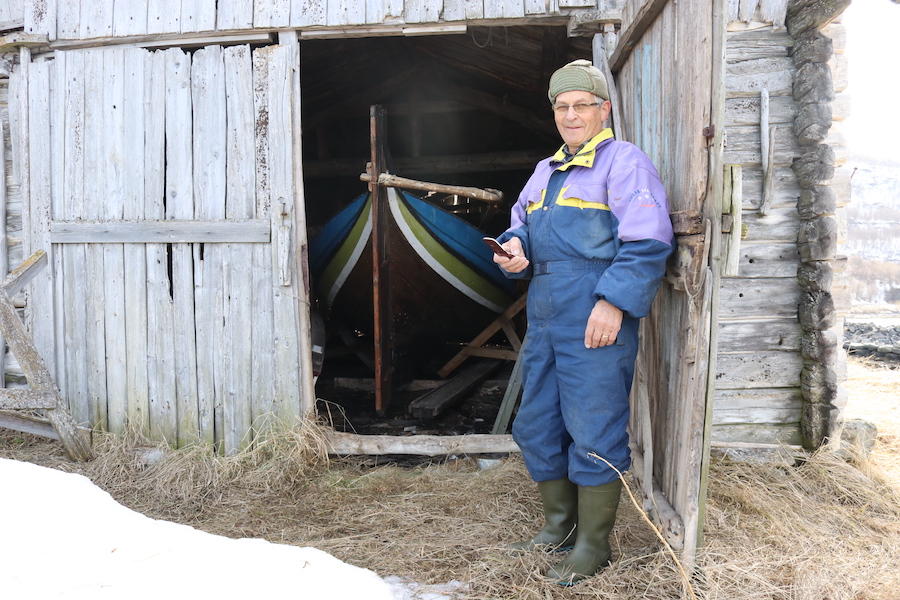
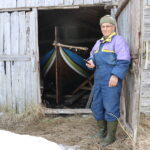
The boathouse and octagon at Nordnes
Enok Isaksen from Indre Nordnes in Gáivuotna / Kåfjord, can be called one of the last fish farmers. He himself has only fished in the fjords, but in the old boathouse, which is worthy of preservation, he keeps the eights that his grandfather used for fishing in Lofoten and Finnmark.
Architecture and building traditions

Holmenes Sea Sami farm
Holmene's Sea Sami farm dates from around 1850. Because it was not burnt down during the Second World War, it has been possible to restore or reconstruct the buildings. It now looks as it did in about 1930 and gives an impression of how Sea Sami families lived at that time.
Architecture and building traditions

Skardalen cultural landscape
Skárfvaggi / Skardalen is a small Sea Sami village in Kåfjord. In 2009, the village was selected as a national cultural landscape in agriculture.
Architecture and building traditionsHistory and religionIndustry and nature use
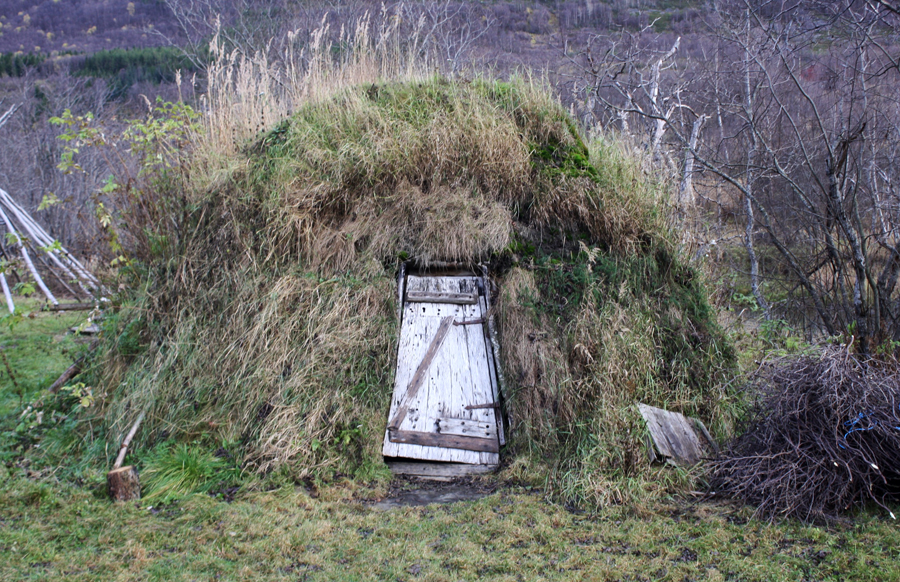
Range / Goahti
A gamme is an earthen hut built from tree trunks and covered with earth and/or peat. In some places in northern Troms, gammes were used as dwellings, barns and boathouses right up until the Second World War.
Architecture and building traditionsHistory and religion

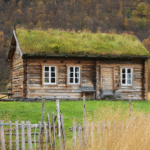
Marj-Inger
The small house in Kjerringdalen in Kåfjord was built by Márjj'Iŋgá just after the Second World War. When Márjj'Iŋgá was born in 1893, Sami was the everyday language in Kjerringdalen. Eventually, Norwegian was also spoken in the village, and she was often called Marj-Inger (Marjinger). Her baptismal name was Inger Alette Johnsen.